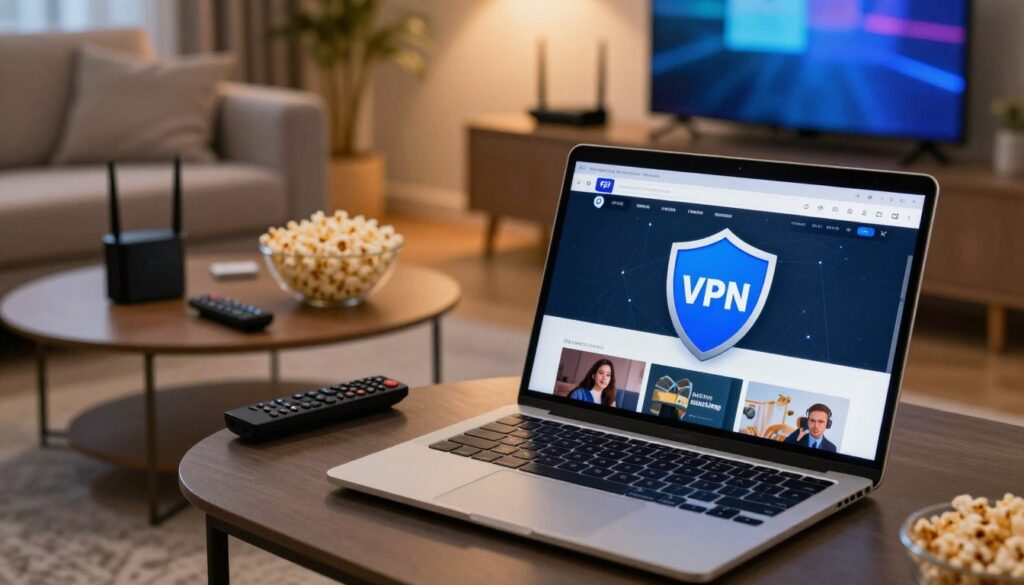
Streaming your favorite shows online has never been easier, but staying safe while you watch is just as important. Many viewers in the United States are now using a VPN for IPTV to keep their personal data private. This simple tool acts as a shield, hiding your activity from prying eyes while you enjoy global content.
Privacy and performance are the two main pillars of a great streaming setup. By masking your digital footprint, you can enjoy a smoother experience without worrying about unwanted tracking. Setting up this technology is a straightforward process that significantly boosts your overall security posture.
Whether you are a casual viewer or a dedicated fan, understanding how to protect your connection is essential. Using a reliable VPN for IPTV ensures that your entertainment remains both private and fast. Let’s explore how you can get started today.
Key Takeaways
- Protect your personal data while streaming content online.
- Improve your connection speed by avoiding bandwidth throttling.
- Access global libraries that might be restricted in your region.
- Ensure your digital footprint remains hidden from third parties.
- Follow a simple setup process to enhance your streaming security.
Why You Need a VPN for IPTV Services
Your internet connection acts like a digital window that anyone can look through while you stream. Without the right tools, your viewing habits and personal data are visible to those watching your traffic. Using a VPN for IPTV is the most effective way to reclaim your personal space in the digital world.
Understanding How IPTV Works in the United States
Internet Protocol Television, or IPTV, delivers television content over your home internet connection rather than through traditional cable or satellite signals. In the United States, your Internet Service Provider (ISP) acts as the gateway for all this data. Because they manage your connection, they can see exactly which services you access and how much bandwidth you consume.
This visibility is a standard part of how modern networks function. However, it means that your ISP has a clear log of your streaming activity. Maintaining IPTV privacy requires you to take active steps to prevent this constant monitoring of your data packets.

The Privacy Risks of Streaming Without Protection
When you stream without a protective layer, you essentially broadcast your location and identity to the world. Every time you connect to a server, you reveal your IP address, which acts as a digital home address. This information allows third-party advertisers and trackers to build a profile based on your preferences.
Secure streaming is not just about avoiding ads; it is about preventing unauthorized entities from logging your behavior. Without protection, your online anonymity is compromised, leaving you vulnerable to data harvesting. Many users do not realize that their habits are being tracked until it is too late.
How a VPN Masks Your Digital Footprint
A Virtual Private Network creates a secure tunnel for your internet traffic. By routing your connection through a remote server, you effectively hide IP address details from the websites and services you visit. This process is essential for anyone who values digital footprint protection.
When you use a VPN, your ISP only sees encrypted data moving to a single server. They cannot see the specific content you are viewing or the sites you visit. By choosing to hide IP address information, you ensure that your online anonymity remains intact. This simple shift in your setup provides the peace of mind needed for truly secure streaming.
Key Features to Look for in a VPN for IPTV
To enjoy your favorite content without interruptions, you must prioritize specific technical capabilities in your VPN provider. Choosing the right tool is essential for maintaining both performance and privacy while you watch. By focusing on these non-negotiable features, you can ensure a secure streaming experience every time you log on.

High-Speed Servers for Buffer-Free Streaming
The most frustrating part of watching IPTV is dealing with constant buffering. A high-speed VPN is necessary to maintain the bandwidth required for high-definition video playback. You should look for providers that offer a vast network of servers optimized specifically for media consumption.
These servers help bypass ISP throttling, which often slows down your connection during peak hours. When you use a fast, reliable server, your stream remains smooth and consistent. This is the hallmark of the best VPN for streaming.
Compatibility with Streaming Devices and Smart TVs
Your VPN must work seamlessly with the hardware you already own. Whether you use a Fire TV Stick, an Android TV, or a dedicated streaming box, the software should be easy to install and navigate. Compatibility ensures that you can protect your entire home network without needing advanced technical skills.
Many top-tier services offer dedicated apps for major platforms. This allows you to establish an encrypted connection with just a few clicks. Always verify that your chosen provider supports your specific device before committing to a subscription.
Strict No-Logs Policy and Encryption Standards
Privacy is the primary reason to use a VPN, so a strict no-logs VPN policy is mandatory. This guarantee ensures that your streaming history is never recorded or stored by the provider. Furthermore, robust encryption standards keep your data hidden from prying eyes.
A VPN kill switch acts as a vital safety net for your privacy. If your connection drops unexpectedly, this feature instantly cuts your internet access to prevent data leaks. Using these tools together creates a truly secure streaming environment.
| Feature | Why It Matters | Benefit |
|---|---|---|
| High-Speed Servers | Prevents buffering | Smooth playback |
| No-Logs Policy | Protects history | Total anonymity |
| VPN Kill Switch | Prevents leaks | Enhanced security |
| Device Support | Broad compatibility | Easy setup |
Selecting the Best VPN for IPTV
Choosing a reliable service is the most important step toward securing your home entertainment setup. With so many options available, finding a VPN for IPTV that balances speed and security is essential for a smooth experience.
Top Recommended VPN Providers for US Users
When looking for the best VPN for streaming, you should prioritize providers with a proven track record in the United States. Services like ExpressVPN, NordVPN, and Surfshark consistently rank high because they offer robust infrastructure designed for media consumption.
These providers are widely recognized as a no-logs VPN, meaning they do not track your viewing habits. This commitment to privacy ensures that your personal data remains confidential while you enjoy your favorite shows.

Evaluating Server Locations and Network Stability
The physical distance between you and the server plays a massive role in your connection quality. To effectively access geo-restricted content, you need a provider with a vast network of servers spread across the country.
High network stability prevents annoying buffering and sudden disconnects during live events. Always look for a provider that offers optimized servers specifically labeled for high-bandwidth activities like video streaming.
Testing VPN Performance on Different Internet Service Providers
Different ISPs handle encrypted traffic in unique ways, which can sometimes lead to speed fluctuations. You can often bypass ISP throttling by using a high-quality connection that masks your traffic patterns from your provider.
We recommend running a speed test while connected to various servers to see which one performs best with your specific internet plan. By testing your no-logs VPN across different times of the day, you can ensure consistent access to geo-restricted content without compromising on quality.
Ultimately, the goal is to find a setup that allows you to bypass ISP throttling effortlessly. Taking the time to test your connection will guarantee that you have the best VPN for streaming for your unique home network.
Setting Up Your VPN on Streaming Devices
Setting up a VPN on your streaming devices is the best way to ensure an encrypted connection for every show you watch. By taking these steps, you create a private tunnel for your data, keeping your viewing habits away from prying eyes. Whether you are a tech enthusiast or a casual viewer, the process is designed to be straightforward and effective.
Installing VPN Apps on Fire TV Stick and Android TV
For users with Fire TV Stick or Android TV platforms, the process is incredibly simple. Most reputable VPN providers offer native applications directly in the official app stores for these devices. You can simply search for your chosen provider, download the app, and log in with your credentials.
Once installed, you can connect to a server with just a single click. This seamless integration allows you to maintain an encrypted connection without needing to navigate complex menus. It is the most efficient way to secure your hardware in minutes.
Configuring VPN Connections on Apple TV and Roku
Some devices, such as Apple TV and Roku, do not support native VPN apps directly. If you own these devices, you may need to use alternative methods to achieve the same level of privacy. One common approach involves using a virtual router on your computer to share a protected connection with your streaming device.
Alternatively, you can configure Smart DNS settings provided by many VPN services. While this does not provide the same level of encryption as a full VPN tunnel, it helps bypass regional restrictions. This streaming device setup requires a bit more technical effort but remains a popular choice for many users.
Using Router-Level VPN Protection for All Home Devices
If you want to protect every device in your home at once, installing a VPN directly on your router is the ultimate solution. By configuring the VPN at the network level, every device connected to your Wi-Fi automatically benefits from the protection. This eliminates the need to manage individual app settings on every single gadget you own.
This method ensures that your entire household enjoys a consistent and secure experience. It is a highly recommended strategy for those who want a comprehensive streaming device setup that works in the background. Once configured, you can simply sit back and enjoy your favorite content with total peace of mind.
Connecting to the Right Server for Optimal Performance
Fine-tuning your VPN settings is the secret to unlocking smooth, high-definition playback. When you hide IP address information, you gain privacy, but you must also ensure your connection remains fast enough for live video. Selecting the right server is the most effective way to maintain a stable stream.
Choosing Servers Based on Geographic Proximity
The physical distance between your location and the VPN server plays a major role in your connection speed. Data packets travel faster when they have a shorter distance to cover. By choosing a server located closer to your actual home, you significantly reduce latency and lag.
This approach is essential for a successful streaming device setup. If you are in the United States, connecting to a server within the country or a neighboring region often provides the best results. Always look for a high-speed VPN that offers a wide variety of local server options to keep your video quality crisp.
Troubleshooting Connection Drops and Speed Issues
Even the best services can experience occasional hiccups. If your stream starts to buffer or the connection drops, do not panic. First, try disconnecting and reconnecting to the same server to refresh your session.
If the problem persists, switch to a different server in the same city or state. Sometimes, a specific server becomes overloaded with traffic, which slows down your performance. Clearing your app cache or restarting your device can also resolve persistent technical glitches quickly.
Switching Protocols for Better Streaming Quality
Your VPN protocol acts as the tunnel through which your data travels. Some protocols prioritize heavy encryption, while others are optimized for speed and performance. If you are trying to access geo-restricted content, the protocol you choose can make a massive difference in your viewing experience.
Experimenting with different settings allows you to find the perfect balance for your network. Most modern apps allow you to toggle between options like WireGuard or OpenVPN with a single click. Refer to the table below to see which protocol might suit your specific needs best.
| Protocol | Speed | Security | Best For |
|---|---|---|---|
| WireGuard | Excellent | High | HD Streaming |
| OpenVPN (UDP) | Good | Very High | General Privacy |
| IKEv2 | Very Good | High | Mobile Devices |
| L2TP/IPsec | Average | Moderate | Legacy Systems |
Navigating Legal and Ethical Considerations
When you stream content, maintaining your IPTV privacy is a top priority for many users. However, it is equally important to understand the legal and ethical landscape that governs how you access media in the United States. Being a responsible streamer means knowing your rights while respecting the rules set by service providers.
Understanding ISP Throttling and Traffic Shaping
Internet Service Providers often use a practice known as traffic shaping to manage network congestion. This can lead to intentional slowdowns, especially when you are streaming high-definition video. By using a VPN, you can effectively bypass ISP throttling because your provider cannot see the specific type of data you are consuming.
When your traffic is encrypted, your ISP treats all data packets equally. This helps you maintain consistent speeds and ensures a smoother viewing experience. Taking control of your connection is a key step in managing your network performance.
Respecting Terms of Service and Copyright Guidelines
While technology offers tools for digital footprint protection, users should always remain mindful of the platforms they use. Every streaming service has a specific Terms of Service agreement that outlines acceptable behavior. It is vital to:
- Review the service agreement for your chosen IPTV provider.
- Avoid accessing content that violates regional copyright laws.
- Use your VPN to enhance security rather than to bypass regional licensing restrictions intentionally.
Adhering to these guidelines ensures that you are using your tools in an ethical manner. Responsible streaming helps keep the ecosystem healthy for everyone involved.
Staying Informed About US Digital Privacy Laws
The regulatory environment regarding online anonymity is constantly evolving. In the United States, US streaming laws are complex and often depend on how content is delivered and accessed. Staying informed about these changes is the best way to protect your interests.
You should keep an eye on updates regarding data collection and consumer rights. By staying educated, you can enjoy your favorite shows with confidence and peace of mind. Knowledge is your best defense when navigating the modern digital world.
Advanced Tips for a Seamless Streaming Experience
Achieving a truly seamless streaming experience requires more than just a basic connection. For power users, fine-tuning your network settings ensures that you maintain secure streaming while staying compliant with US streaming laws. By moving beyond default configurations, you can create a high-performance environment tailored to your specific needs.
Utilizing Split Tunneling for Local and Global Content
Split tunneling is a powerful feature that allows you to choose which apps use the VPN and which use your standard internet connection. This is perfect for accessing geo-restricted content on one device while keeping your local banking or shopping apps on your regular network. It also helps you bypass ISP throttling by ensuring only your high-bandwidth streaming traffic is routed through the encrypted tunnel.
Managing Multiple Connections Simultaneously
Most premium providers allow you to protect several devices at once, which is vital for a modern streaming device setup. You can keep your smart TV, tablet, and smartphone under an encrypted connection simultaneously without sacrificing speed. Managing these connections effectively ensures that every member of your household enjoys a private and buffer-free experience.
Updating VPN Software for Security Patches
Keeping your application updated is the simplest way to maintain a high-speed VPN performance. Developers frequently release security patches that fix vulnerabilities and improve compatibility with the latest streaming platforms. Always check your settings menu to ensure you are running the most recent version of your software.
| Feature | Primary Benefit | User Level |
|---|---|---|
| Split Tunneling | Traffic Optimization | Advanced |
| Multi-Device Support | Household Coverage | Intermediate |
| Software Updates | Security & Stability | All Users |
Common Mistakes to Avoid When Using a VPN for IPTV
Many beginners unknowingly leave their digital identity exposed by overlooking simple yet critical security settings. While the goal is to hide IP address information effectively, small errors in your setup can quickly undermine your efforts. Staying vigilant ensures that your streaming habits remain private and secure.
Relying on Free VPN Services That Compromise Data
It is tempting to choose a free service, but these providers often lack the infrastructure required for high-quality video. Many free services monetize your personal information to cover their operational costs, which is the exact opposite of what you want. Choosing the best VPN for streaming means investing in a reputable, no-logs VPN that prioritizes your data integrity over profit.
Forgetting to Enable the Kill Switch Feature
A VPN kill switch is your primary line of defense against unexpected connection drops. If your VPN connection suddenly fails, this feature automatically cuts your internet access to prevent your real data from leaking. Forgetting to toggle this setting is a common mistake that can leave your activity visible to your ISP for even a few seconds.
Ignoring DNS Leak Protection Settings
Even when your connection seems secure, your DNS requests might still be traveling through your ISP instead of the encrypted tunnel. This oversight can reveal exactly what you are watching, effectively destroying your IPTV privacy. Always verify that your provider has built-in DNS leak protection enabled in the settings menu to ensure your traffic remains completely anonymous.
Conclusion
Taking control of your home entertainment setup requires more than just a fast internet connection. Prioritizing your digital footprint protection ensures that your viewing habits remain private while you enjoy content across the United States.
Reliable tools like ExpressVPN or NordVPN provide the necessary infrastructure to maintain your online anonymity. These services help you navigate complex US streaming laws with ease. You gain peace of mind knowing your data stays hidden from your service provider.
Always verify that your VPN kill switch remains active during every session. This simple setting prevents accidental data leaks if your connection drops unexpectedly. Consistent security habits transform your streaming experience into a safer activity for your entire household.
Engage with your privacy settings today to see the difference in your network performance. Share your experiences with these tools to help others build a more secure digital environment. Your proactive approach makes a significant impact on how you consume media in the modern age.
FAQ
Why is using a VPN essential for streaming IPTV in the United States?
Using a VPN is crucial because it acts as a secure tunnel for your data, protecting your privacy from third-party advertisers and preventing Internet Service Providers (ISPs) like Comcast Xfinity or AT&T from monitoring your viewing habits. By masking your IP address, you ensure that your digital footprint remains private while enjoying global content libraries without local restrictions.
Will a VPN cause my IPTV stream to buffer?
Not if you choose a high-quality provider. While some basic services might slow you down, premium options like NordVPN or ExpressVPN offer high-speed servers specifically optimized for high-definition streaming. In many cases, a VPN can actually improve your experience by preventing ISP throttling, where your provider intentionally slows down heavy video traffic.
Which VPN providers are best for US-based IPTV users?
For the best balance of speed and security, we recommend industry leaders such as ExpressVPN, NordVPN, and Surfshark. These brands are known for their strict no-logs policies, massive server networks, and excellent compatibility with popular American streaming hardware like the Amazon Fire TV Stick and Android TV.
Can I install a VPN directly on my Smart TV or Roku?
While many Android-based Smart TVs and the Fire TV Stick have native apps you can download directly from the store, some devices like Roku or Apple TV do not support direct VPN installation. In these cases, you can protect your entire home by configuring the VPN at the router level or using a workaround like a virtual router to ensure every device is secured.
What should I do if my VPN connection drops while I am watching a show?
This is where a Kill Switch becomes vital. A reliable VPN will have this feature enabled to automatically cut your internet connection if the VPN fails, preventing your real data from leaking. To get back to streaming, try switching your connection protocol to WireGuard or OpenVPN for better stability, or select a server location that is geographically closer to your actual home.
Is it safe to use a free VPN for IPTV?
Generally, no. Free VPN services often compromise your security by selling your browsing data to third parties to cover their costs. They also typically have slower speeds, data caps, and fewer server options, leading to constant buffering. For a seamless and private experience, it is always better to invest in a reputable, paid service that prioritizes your digital security.
What is split tunneling, and how does it help with streaming?
Split tunneling is an advanced feature offered by providers like Surfshark that allows you to choose which apps go through the VPN and which use the regular internet. For example, you can route your IPTV app through an encrypted server in another region while allowing your local banking app to use your standard US connection, giving you the best of both worlds.
How does a VPN help with ISP traffic shaping?
Many ISPs use traffic shaping to identify and slow down high-bandwidth activities like streaming. Because a VPN encrypts your data, your ISP cannot see what you are doing—only that you are using a VPN. This prevents them from selectively throttling your IPTV stream, often resulting in a much smoother, buffer-free experience.
What are DNS leaks, and why should I care?
A DNS leak occurs when your browsing requests are sent outside the secure VPN tunnel, exposing your real location and activity to your ISP. To stay fully protected, ensure your VPN settings have DNS leak protection toggled on. This ensures that every piece of information stays behind a wall of military-grade encryption.