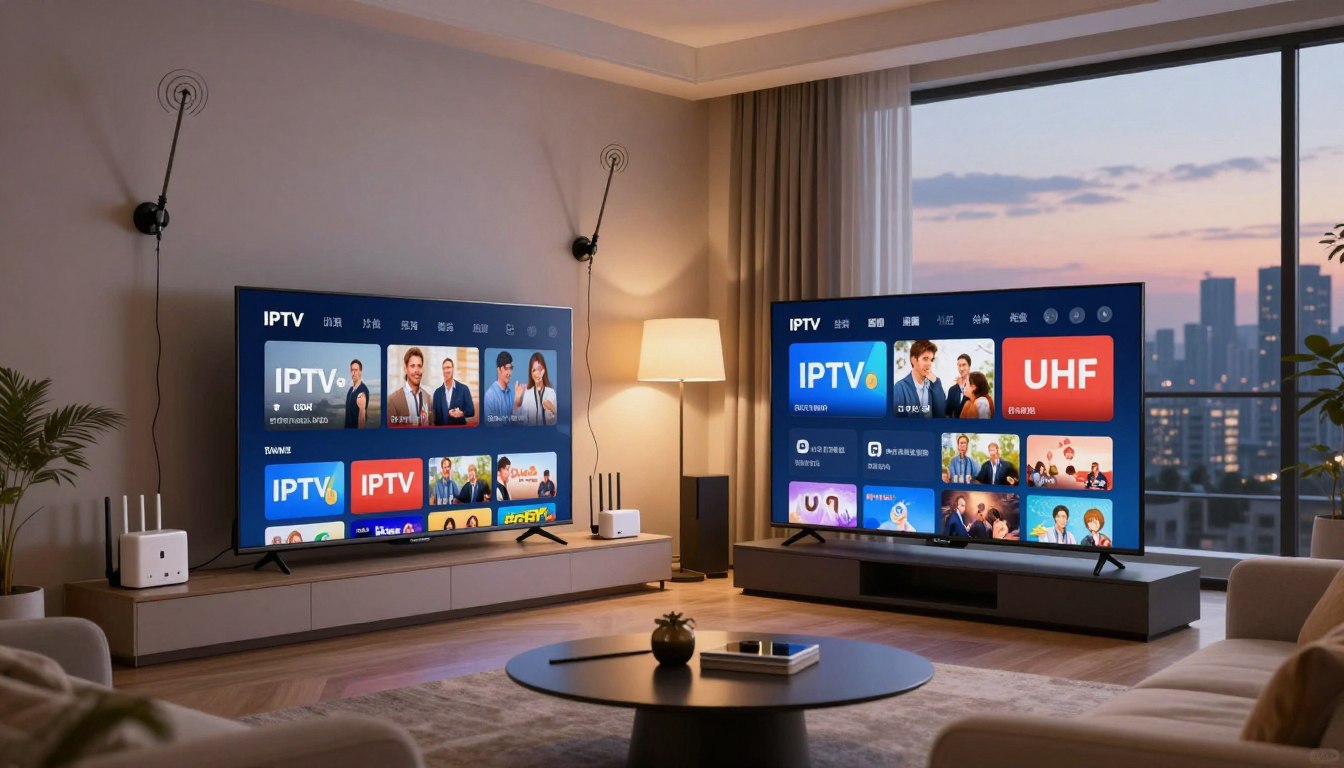
The landscape of home entertainment is shifting rapidly across the United States. Many viewers are moving away from traditional cable packages to find more flexible ways to watch their favorite shows. A fascinating development in this space is the emergence of IPTV on UHF, a technology that blends internet-based delivery with classic broadcast spectrums.
This innovative approach helps bridge the gap between modern streaming services and reliable over-the-air signals. By utilizing specific frequency bands, it offers a unique solution for those looking to cut the cord without losing access to high-quality content. Understanding this technology is essential for any tech enthusiast who wants to stay ahead of the curve.
Whether you live in a rural area or a busy city, IPTV on UHF provides a fresh perspective on how we consume media today. It simplifies the viewing experience while keeping costs manageable for the average household.
Key Takeaways
- Modern streaming meets traditional broadcast signals for better coverage.
- This technology serves as a powerful tool for cord-cutters in the US.
- It provides a reliable alternative to standard internet-only streaming setups.
- Viewers can enjoy high-quality content without expensive cable subscriptions.
- The system is designed to be accessible for both tech experts and beginners.
Understanding the Convergence of IPTV on UHF
By merging the reliability of UHF waves with the versatility of the internet, we are entering a new age of media consumption. This hybrid broadcast approach represents a significant leap forward for viewers across the United States. It bridges the gap between legacy infrastructure and the high-speed demands of modern digital content.

The Evolution of Broadcast Television
Television has traveled a long road from the days of fuzzy analog signals to the high-definition streaming era we enjoy today. For decades, families gathered around sets that relied entirely on over-the-air signals captured by rooftop antennas. The transition to digital broadcasting marked the first major shift, offering clearer pictures and more efficient use of the airwaves.
Today, the landscape continues to evolve as we integrate internet-based delivery into the mix. This progression ensures that viewers receive high-quality content regardless of their location. It is a testament to how technology adapts to meet our growing appetite for seamless entertainment.
Defining IPTV and UHF Spectrum
To grasp the power of IPTV on UHF, we must first define the two core components. UHF, or Ultra High Frequency, refers to the radio waves that carry traditional television signals through the air. These waves are known for their ability to travel long distances and penetrate obstacles effectively.
IPTV, or Internet Protocol Television, delivers media content over a network rather than through traditional cable or satellite wires. When we combine these, we create a hybrid broadcast system that leverages the strengths of both mediums. This integration allows for a more robust delivery method that is both reliable and scalable.
Why Hybrid Delivery Systems Matter
Hybrid delivery systems are essential because they provide a safety net for media consumption. When internet speeds fluctuate, the UHF signal acts as a stable backbone for essential programming. This ensures that viewers do not experience constant buffering or service interruptions during peak usage times.
The following table highlights the key differences between traditional delivery and the modern hybrid approach:
| Feature | Traditional IPTV | Hybrid IPTV on UHF |
|---|---|---|
| Signal Source | Internet Only | Internet + UHF Waves |
| Reliability | Dependent on ISP | High (Redundant paths) |
| Bandwidth Usage | High | Optimized |
| Accessibility | Urban-focused | Broad (Rural & Urban) |
By utilizing IPTV on UHF, broadcasters can reach audiences that were previously underserved by high-speed internet alone. This hybrid broadcast model is truly changing how we interact with our favorite shows and live events. It offers a future where connectivity is no longer a barrier to high-quality television.
The Technical Mechanics of UHF Signal Transmission
To grasp how IPTV functions over the air, we must first explore the technical mechanics of UHF frequencies. These waves act as invisible highways, carrying massive amounts of information from broadcast towers directly to your home antenna. Understanding the UHF signal is essential for anyone looking to optimize their streaming experience.
How UHF Frequencies Carry Data
At its core, the transmission process involves converting digital data into radio frequency waves. Broadcasters use sophisticated modulation techniques to pack binary code into these waves, allowing for high-speed data delivery. Efficiency is the primary goal when encoding video and audio streams into these packets.
- Data is compressed to fit within specific frequency channels.
- Modulation ensures the signal remains stable during transit.
- Error correction protocols help reconstruct data if interference occurs.

The Role of Digital Television Standards
Modern broadcasting relies heavily on established digital television standards to maintain order. These protocols ensure that the signal sent by a station is perfectly understood by your tuner or gateway. Without these universal rules, the complex data packets would arrive as scrambled, unreadable noise.
These standards dictate how information is structured and prioritized during transmission. By adhering to these guidelines, broadcasters can guarantee that high-definition content reaches your device without losing quality. Compatibility is the backbone of a seamless hybrid media ecosystem.
Bandwidth Limitations and Signal Propagation
While UHF is powerful, it faces physical constraints regarding how much data it can carry. Bandwidth limitations mean that broadcasters must balance image resolution with the available spectrum space. Strategic compression is often used to maximize the utility of every available frequency.
Furthermore, signal propagation plays a critical role in how far and how well your content travels. Factors like terrain, building materials, and weather can impact the strength of the UHF signal as it moves through the air. Understanding these variables helps users position their antennas for the best possible reception.
How IPTV on UHF Works in Practice
Integrating internet protocols into standard broadcast signals is a fascinating feat of modern engineering. By leveraging the existing UHF signal infrastructure, broadcasters can create a hybrid broadcast environment that delivers content more efficiently than ever before. This approach allows viewers to enjoy the reliability of traditional television alongside the interactive features of modern web-based media.

Integrating Internet Protocols with Over-the-Air Signals
The core of this system involves wrapping internet data packets within the standard broadcast stream. This streaming technology allows your television to receive both live video feeds and on-demand data simultaneously. It effectively turns your antenna into a high-speed receiver capable of handling complex digital traffic.
“The future of television is not just about choosing between broadcast or broadband, but about the seamless convergence of both into a single, robust delivery pipe.”
— Broadcast Engineering Weekly
The Role of Tuners and Gateways
To make this work, you need specialized hardware that acts as a bridge between the airwaves and your home network. These devices, often called hybrid gateways, perform several critical tasks to ensure your viewing experience remains uninterrupted.
- Signal Reception: Capturing the incoming UHF waves from your antenna.
- Protocol Translation: Converting broadcast data into a format your router understands.
- Network Distribution: Sending the decoded stream to your smart TV or mobile device.
Data Encapsulation and Signal Decoding
The final step in this process is data encapsulation, where internet packets are carefully packaged into the broadcast stream. Once the signal reaches your home, the tuner performs the reverse process, known as decoding. This ensures that the high-quality video content is reconstructed perfectly for your screen.
Without this precise data encapsulation, the streaming technology would fail to maintain the high bitrates required for 4K resolution. By managing these packets effectively, the system ensures that your favorite shows arrive with crystal-clear quality every time you tune in.
Key Benefits of Utilizing UHF for IPTV Delivery
Modernizing television distribution requires innovative solutions that bridge the gap between traditional broadcasting and digital streaming. By combining the wide-reaching power of the UHF spectrum with the flexibility of internet protocols, we can create a more robust media ecosystem. This broadband integration offers a unique path forward for both viewers and service providers.
Expanding Reach in Rural Areas
For many households in rural parts of the United States, high-speed fiber or cable internet remains out of reach. Utilizing the UHF spectrum allows broadcasters to deliver high-quality content directly to these underserved regions without needing a physical wire connection. This ensures that everyone, regardless of their location, can enjoy a reliable television experience.
Reducing Network Congestion for ISPs
Internet Service Providers often struggle with the massive data demands of modern streaming services. By offloading heavy video traffic to broadcast signals, we can significantly lower network congestion across existing infrastructure. This shift helps maintain faster, more stable internet speeds for essential tasks like remote work and online education.
- Decreased strain on local data centers.
- Improved stability for residential internet users.
- Efficient use of existing broadcast towers.
Cost-Effectiveness for Local Broadcasters
Transitioning to this hybrid model provides a sustainable future for local broadcasting stations. Instead of relying solely on expensive infrastructure upgrades, stations can leverage their existing UHF assets to reach a wider audience. This approach to local broadcasting makes it easier for smaller stations to compete in a digital-first market while keeping operational costs manageable.
Ultimately, the move toward broadband integration is about creating a smarter, more efficient way to consume media. By addressing network congestion through smart signal management, we pave the way for a more connected future.
Hardware Requirements for Seamless Streaming
Building a robust home entertainment system requires careful attention to the hardware that bridges broadcast signals and digital streams. By selecting the right components, you ensure that your streaming technology functions at its peak performance level. This foundation is essential for a stable and high-quality viewing experience in any modern household.
Choosing the Right UHF Antenna
The quality of your signal begins with the UHF antenna you install. If you live in a rural area, you likely need a high-gain directional antenna to capture distant signals effectively. Conversely, those in urban environments might find that a compact, multi-directional model provides sufficient coverage.
Always check your local signal map before making a purchase. Placing your antenna in an elevated position, such as an attic or rooftop, significantly improves reception. This simple step minimizes interference and ensures a stronger feed for your conversion hardware.
Network Tuners and IPTV Converters
Once the signal reaches your home, a network tuner acts as the vital bridge between the airwaves and your digital devices. These tuners convert raw broadcast data into a format that your home network can distribute easily. Compatibility is key when selecting these units, as they must support the specific digital standards used in your region.
IPTV converters then take this processed data and translate it for your smart TVs or streaming boxes. Using high-quality converters prevents data loss and keeps your video feed smooth. Investing in reliable hardware here prevents the frustration of buffering or pixelated images during peak viewing hours.
Router and Modem Compatibility
Your home network serves as the backbone for your entire media setup. To support effective broadband integration, your router must be capable of handling high-bandwidth traffic without breaking a sweat. A modern, dual-band or tri-band router helps manage data flow efficiently across multiple devices.
Proper configuration is also necessary to avoid network congestion, which can degrade your streaming quality. Ensure your modem is updated to support the latest protocols for fast data transfer. By prioritizing a strong network infrastructure, you create a seamless environment where broadcast and internet content coexist perfectly.
Challenges and Limitations of UHF-Based IPTV
Despite the benefits of UHF-integrated IPTV, several factors can impact your overall viewing experience. While these systems offer a unique way to consume media, they are not immune to the physical realities of wireless transmission. Understanding these hurdles is the first step toward building a more reliable home entertainment setup.
Signal Interference and Environmental Factors
The quality of your UHF signal depends heavily on your immediate surroundings. Physical obstructions like tall buildings, dense foliage, or even heavy rain can disrupt signal propagation, leading to pixelation or total loss of service. If your UHF antenna is not positioned correctly, these environmental factors become even more pronounced.
Furthermore, electromagnetic noise from household appliances or nearby industrial equipment can cause significant signal interference. This interference often manifests as dropped frames or buffering, which can be frustrating during live broadcasts. Proper placement and shielding are vital to maintaining a clean connection.
Latency Issues in Hybrid Environments
One of the primary technical hurdles in a hybrid system is managing latency. Because the system must synchronize data arriving from both the internet and the broadcast stream, slight timing mismatches can occur. This delay is particularly noticeable during live sports or real-time events where every second counts.
Network congestion on the internet side of the equation can further exacerbate these delays. When your local network is busy, the processing time required to merge the two streams increases. This creates a bottleneck that impacts the fluidity of your media playback.
Regulatory Hurdles in the United States
The landscape for broadcast spectrum usage in the United States is strictly governed by the Federal Communications Commission (FCC). Broadcasters must navigate complex rules regarding how they utilize their assigned frequencies for data transmission. These regulations ensure that public airwaves remain organized, but they also limit the flexibility of hybrid IPTV deployments.
Changes in spectrum allocation can sometimes force providers to adjust their infrastructure unexpectedly. Staying compliant with these evolving standards requires constant vigilance from both hardware manufacturers and service providers. Below is a summary of the common challenges faced by users and providers alike.
| Challenge Type | Primary Cause | Impact on User | Mitigation Strategy |
|---|---|---|---|
| Environmental | Physical Obstructions | Signal Loss | Antenna Optimization |
| Technical | Network Congestion | Increased Latency | Quality of Service Settings |
| Regulatory | FCC Spectrum Rules | Service Availability | Hardware Compliance |
Comparing Traditional IPTV vs. UHF-Integrated IPTV
The landscape of modern television is shifting, forcing viewers to weigh the pros and cons of traditional internet-based services against emerging broadcast models. While both methods aim to deliver high-quality video, the underlying technology creates distinct differences in how you receive your favorite shows.
Infrastructure Differences
Traditional IPTV relies entirely on your home internet connection to pull data from a server. This means your viewing experience is tied directly to the bandwidth provided by your local ISP.
In contrast, IPTV on UHF utilizes a hybrid broadcast approach. It combines the reach of traditional over-the-air signals with the interactive capabilities of the internet. By offloading heavy video traffic to broadcast towers, this model reduces the strain on your home network.
User Experience and Reliability
Reliability is often the biggest concern for cord-cutters. Standard streaming services can suffer during peak hours when internet traffic spikes, leading to buffering or lower resolution.
A hybrid broadcast system offers a more stable baseline because the primary video feed arrives via a dedicated UHF signal. However, users must be mindful of signal interference caused by physical obstacles like buildings or trees. While internet-based IPTV is prone to network-wide latency, UHF-integrated systems provide a more consistent stream for live events.
Scalability for Future Media Consumption
As the demand for 4K and 8K content grows, the limitations of current internet infrastructure become more visible. Relying solely on broadband for all media consumption can lead to significant congestion.
IPTV on UHF provides a scalable solution by distributing the load across different transmission mediums. This ensures that even as data demands increase, the overall latency remains manageable for the end user. By minimizing signal interference through smart integration, this approach represents a robust path forward for the industry.
| Feature | Traditional IPTV | UHF-Integrated IPTV |
|---|---|---|
| Primary Delivery | Internet/Broadband | Hybrid (UHF + Internet) |
| Network Load | High | Low |
| Reliability | ISP Dependent | High (Broadcast-based) |
| Scalability | Limited by Bandwidth | High (Spectrum Efficient) |
Future Trends in Broadcast and Internet Integration
As we peer into the future, the integration of internet protocols and broadcast signals promises to redefine how we consume content. The industry is moving away from rigid, siloed delivery methods toward flexible, software-defined architectures. These changes are rooted in evolving digital television standards that prioritize versatility and user control.
The Impact of ATSC 3.0 on IPTV
The arrival of ATSC 3.0 is a game-changer for the industry. This standard allows local broadcasting to function much like a high-speed internet connection. By merging over-the-air signals with IP-based data, broadcasters can offer personalized content and interactive features directly to viewers.
Advancements in Signal Compression
Efficient data encapsulation is essential for managing the massive amounts of information required for high-definition streaming. New compression algorithms allow providers to pack more data into the same UHF spectrum without sacrificing quality. This technical leap ensures that high-quality video remains accessible even in areas with limited bandwidth.
The Shift Toward Unified Media Ecosystems
We are witnessing a transition toward a truly unified media ecosystem where the line between broadcast and broadband disappears. This convergence creates a seamless experience where devices automatically switch between signal sources to maintain a stable connection. The following table highlights how these future trends compare to legacy systems.
| Feature | Legacy Broadcast | Future Integrated System |
|---|---|---|
| Signal Type | One-way RF | Hybrid IP/RF |
| Interactivity | None | High (Two-way) |
| Content Delivery | Fixed Schedule | On-Demand/Personalized |
| Scalability | Limited | Highly Scalable |
Conclusion
The landscape of home entertainment is shifting toward a more flexible model. By merging UHF signals with internet protocols, viewers gain access to a robust and reliable way to watch content. This hybrid approach ensures that high-quality video reaches more homes across the United States.
Adopting new standards like ATSC 3.0 remains vital for this transition. This technology allows broadcasters to deliver data more efficiently while improving picture quality. It serves as the backbone for a modern media ecosystem that bridges the gap between traditional airwaves and digital streaming.
Staying informed about these technical changes helps you make better decisions for your home setup. You can prepare for a future where broadcast and internet services work in harmony. This unified media ecosystem promises to make your favorite shows and live events easier to access than ever before.
Explore your local broadcast options and check your equipment compatibility today. Embracing these advancements puts you at the forefront of the next wave in television innovation. Your participation in this evolving space helps shape the way we all experience media in the years ahead.
FAQ
What exactly is IPTV on UHF and why should cord-cutters care?
A: IPTV on UHF is a hybrid technology that combines the reliability of Over-the-Air (OTA) broadcast signals with the flexibility of internet protocols. For cord-cutters, this means you can receive high-quality television content through the UHF spectrum without relying solely on a high-speed data plan, making it a perfect solution for those looking to bypass traditional cable costs while maintaining a premium viewing experience.
Do I need a specific type of antenna to receive these signals?
Yes, you will need a high-quality UHF antenna. Popular brands like Mohu Leaf or Winegard offer specialized indoor and outdoor models designed to capture digital television signals effectively. The right antenna ensures that the signal propagation is strong enough to deliver a stable, high-definition picture to your tuner.
How does ATSC 3.0 (NextGen TV) impact this technology?
A: ATSC 3.0, often marketed as NextGen TV, is the major catalyst for this integration. It is a new broadcast standard that allows for 4K UHD video, HDR, and interactive features to be delivered over the air. It essentially turns your local broadcast signal into a robust data pipe, enabling IPTV-like capabilities without the bandwidth limitations of a standard internet connection.
Can I use my existing streaming devices like a Roku or Apple TV?
You can, but you will typically need a gateway or network tuner to bridge the gap. Devices such as the SiliconDust HDHomeRun or a Tablo DVR take the signal from your UHF antenna and convert it into data packets that can be streamed over your home Wi-Fi to your Sony or Samsung smart TV and other streaming peripherals.
Is IPTV on UHF a good solution for people living in rural areas?
Absolutely. One of the biggest benefits is expanding reach in rural areas where fiber-optic or high-speed cable internet may not be available. Because UHF frequencies can travel long distances and penetrate obstacles better than high-frequency signals, this technology provides a vital link for consistent entertainment and information in less-populated regions.
Does weather or signal interference affect the quality of the stream?
Like any broadcast technology, environmental factors can play a role. Issues such as multipath interference (signals bouncing off buildings) or heavy storms can occasionally cause “pixelation.” However, modern signal decoding and error correction in newer standards like ATSC 3.0 are designed to be much more resilient than old analog or early digital signals.
How does this help local broadcasters and ISPs?
It’s a win-win. Local broadcasters like Nexstar or Sinclair Broadcast Group can reach more viewers more efficiently. Meanwhile, it helps Internet Service Providers (ISPs) like Comcast or Spectrum by reducing network congestion. By offloading popular live events (like the Super Bowl) to UHF broadcast, the strain on the traditional internet grid is significantly lowered.
Are there any legal or regulatory hurdles for this technology in the United States?
The FCC (Federal Communications Commission) strictly regulates the UHF spectrum. While the transition to NextGen TV is fully underway, broadcasters must balance their spectrum usage between old and new standards to ensure no viewers are left behind. As the technology scales, regulatory hurdles regarding data privacy and spectrum licensing continue to be a primary focus for industry leaders.
Will this technology eventually replace traditional IPTV services?
Rather than replacing it, we are seeing a unified media ecosystem. Traditional IPTV services like YouTube TV or Hulu + Live TV may eventually integrate UHF-based delivery to improve reliability and scalability. The future is likely a seamless blend where your device automatically chooses the most stable signal—whether it’s coming from a satellite, a fiber line, or a UHF tower.